Imagine this situation: you dismiss an employee, you believe you did everything according to the law, and a year later a court orders you to reinstate him and pay him for the entire period. This is not an uncommon story in Georgian practice. The Labor Code does not leave the employer a free choice an incorrectly drafted notice or a missed deadline is enough for the entire procedure to be declared invalid.
The Labor Code of Georgia recognizes a specific list: there is no open-ended formulation of the "other similar reason" type. The most frequently used grounds are staff reduction (an economic or organizational change that objectively necessitates a reduction of the workforce), disciplinary violation, incompatibility of qualifications with the position held, and prolonged incapacity for work (more than 40 days in a row, or more than 60 days within six months, after the leave available by law has already been used).
Separately, there is "another objective circumstance", the only relatively flexible ground, but this is exactly where the greatest difficulties and mistakes occur. The law directly requires that the specific circumstance be clearly stated — a general phrase will not be accepted in court. The remaining grounds (expiration of the term, agreement of the parties, the employee's own resignation, liquidation) give rise to less dispute. And, of course, dismissal on discriminatory grounds, due to pregnancy, or due to military conscription is prohibited by law.
The notice period directly affects the amount owed. If the ground is staff reduction, incompatibility of qualifications, incapacity for work, or "another objective circumstance," the employer has two options: either give 30 days' notice and pay one month's salary, or give 3 days' notice, but then the compensation doubles, to a minimum of two months. Faster dismissal is more costly for the business. In the case of disciplinary violation or expiration of the term, this mechanism does not apply at all, however, if the employee decides to leave on their own initiative, it is the employee who is obligated to give the employer 30 days' notice.
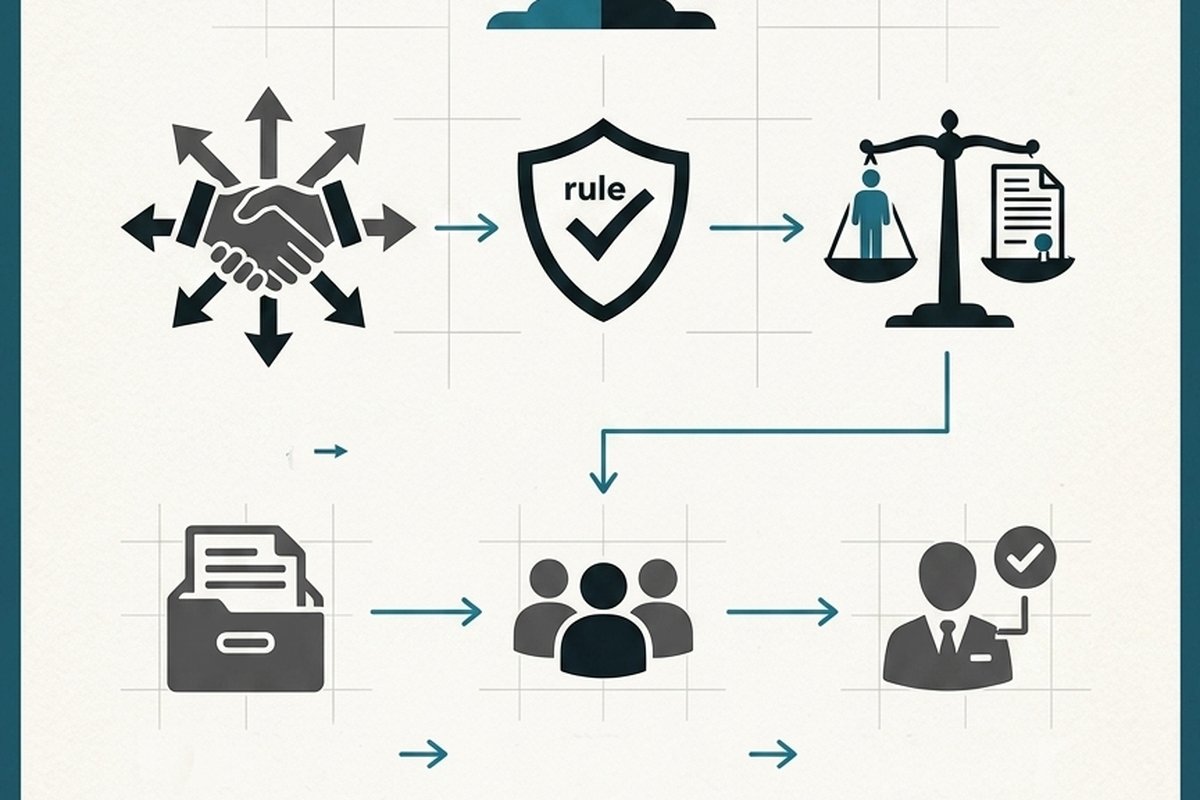
After the notice, the employee has 30 days to request justification, while the employer has 7 days to respond. Missing the deadline shifts the burden of proof onto the employer, which significantly weakens their position in court. After receiving the justification, the employee has another 30 days to file a claim. If the court declares the decision invalid, the employer is obligated either to reinstate the employee to their original or an equivalent position, or to pay the compensation determined by the court; in addition, the employee may separately claim compensation for forced idle time for the period from termination until the enforcement of the court decision.
Mass dismissal is subject to a different rule. for example, if you dismiss at least 10 people in a workforce of 20–100, or at least 10% of staff in a workforce of more than 100, within 30 days, for a reason unrelated to the individual, an individual notice is no longer sufficient. In this case, consultation with employee representation is required, along with notifying the ministry and the employees at least 45 days in advance.
The employer has 7 days for the final settlement. If it is specifically the employer who terminates the contract on their own initiative, this amount must necessarily include compensation for unused leave, proportional to the period worked.
The most common problem in practice is not the incorrect selection of grounds, but insufficient justification — this happens especially in the case of "another objective circumstance." This is exactly where employees most often win in court, and this is exactly why it is worth consulting a lawyer before starting the dismissal process — not for the sake of formality, but so that you do not later have to prove in court what should have been formulated in the notice itself from day one.